
About IndoVital
A small editorial project about men's supplements in Indonesia
We are based in Yogyakarta, we read labels for a living, and we publish what we find in plain English. This page explains who writes the material, how products get researched, and where we draw the line between describing a formula and making claims about it.
Who writes this
The site is written by a small team that spends its time on Indonesian supplement listings, retail packaging, and product specification sheets. We are not a retailer and we do not take a position on which brand a reader should buy.
Our work is closer to a consumer guide than a shop: gather the formats, describe the ingredient groups, note the trust marks, and explain what each part of a label actually refers to. That mandate keeps the copy narrow on purpose — we cover men's vitamin formulas, energy and endurance formulas, and the healthy lifestyle products that sit alongside them.
- Where we are
- Jl. Malioboro No. 60, Sosromenduran, Yogyakarta, 55271
- Reach us
- Monday to Friday, 09:00–18:00
+62 274 521 706
[email protected]
Research first, verdicts never
We describe a category, not a single bottle.
So an update is usually a rewrite of one section — not a new promise about what a product will do for you.
How we research a product type
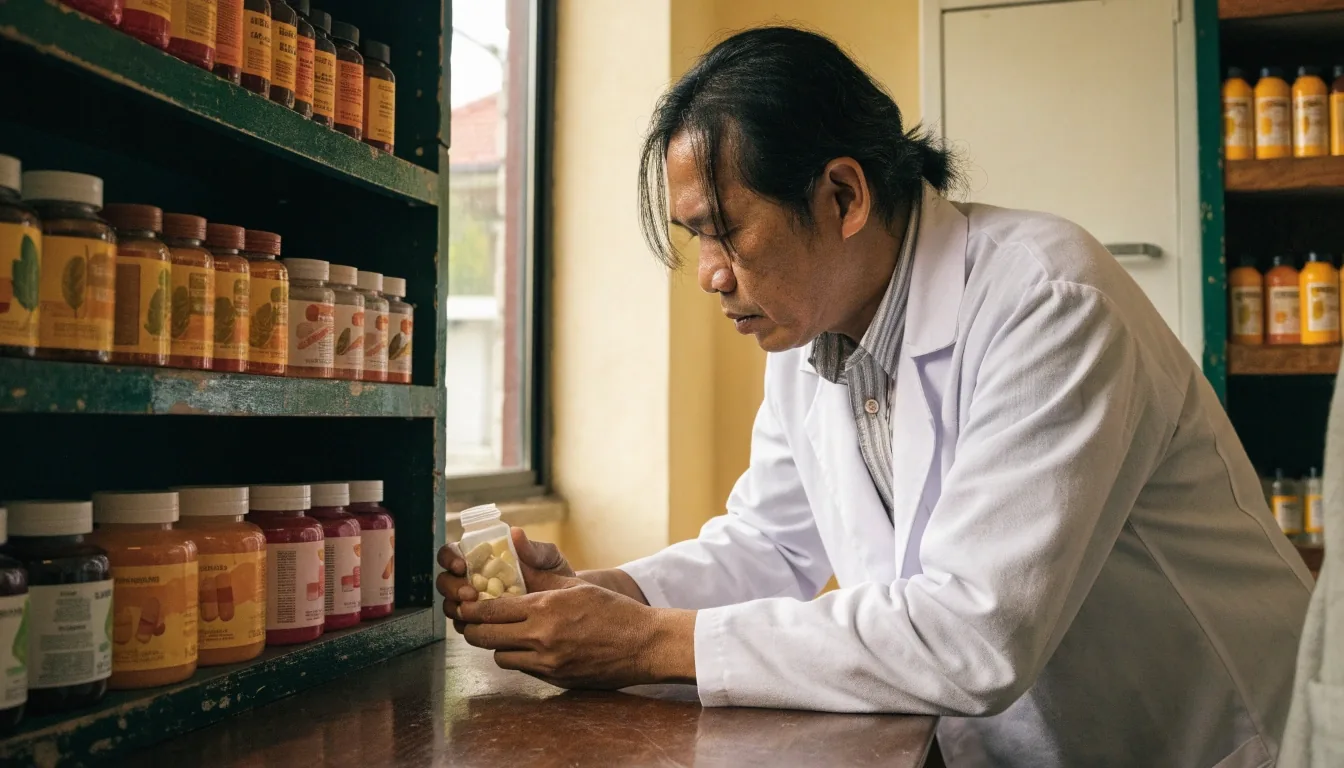
For each product category we start with the physical or listed specification: the ingredient panel, the serving size, the capsule or softgel count, and any registration or certification mark shown. Same order every time, so two pages written months apart still describe products the same way.
Start with the specification
Ingredient panel, serving size, count per box, and any halal mark or BPOM registration number visible on the packaging. That is the floor, and nothing enters a page below it.
Compare across listings
We put the same category side by side across several listings to see which ingredients recur and which appear once. A recurring ingredient tells you something about the format; a one-off tells you something about the advertising.
Separate term from fact
If a term appears only in ad copy and never in a specification, we record it as a marketing term rather than an ingredient fact. Readers see which is which on the page.
What we do not do
The limits below are the editorial policy, not an oversight. They are what makes the ingredient writing on this site worth reading.
-
No product tests. We do not run our own tests on formulas and we do not present lab-sounding language as if we had.
-
No outcome measurements. We do not measure physical results, and we do not publish study results we have not reviewed ourselves.
-
No ranking by sales or ad spend. A brand cannot move up a page here by buying placement or by selling more units.
-
No unreviewed claims. Where a claim appears on a manufacturer page and nowhere else, we leave it out rather than repeat it with a caveat.

How we handle health language
Supplement copy in this niche often drifts toward medical language. We keep it out. Nothing on this site describes a product as a way to address a condition, and we do not frame formulas as alternatives to professional care.
Instead we describe what a formula contains, what format it takes, and how people typically work it into a day: with a meal, before a training session, alongside an existing routine they already keep. Where the wording gets close to a health question, we say plainly that a qualified professional is the right source — and we stop there.
That is also why our pages tend to describe ingredients and formats in detail while saying little about what a product will do for you. It keeps the reading useful for men comparing natural supplements for men without turning a label into advice.
The Indonesia context
Generic global supplement content does not translate cleanly to this shelf. The formats, the ingredient names, and the questions buyers ask here are their own thing.
Marks buyers check first
Packaging here frequently carries a halal mark and a BPOM registration number, and those two cues weigh heavily with buyers. We note them as trust marks — and note just as clearly when we cannot find one.
Formats on real shelves
Imported whole-food multis, local herbal capsule lines, and mid-priced softgel products sold through pharmacies and marketplaces all share shelf space. Each one is described in the shape people actually buy it.
Local ingredient names
The ingredient names that recur in Indonesian listings rarely match their international spellings, and we list both so a reader can match what is printed with what is sold.
Everyday routines
A buyer in Yogyakarta or Surabaya is usually folding a supplement into a routine that already exists — meals, a gym slot, or a morning walk. The practical question is where it fits, not whether it sounds impressive.
How often we update
Product lines get reformulated, package counts change, and listings disappear. We review category pages periodically and update them when a format or an ingredient pattern shifts enough to matter.
Because we describe categories rather than individual stock, an update is usually a rewrite of one section rather than a full page. Where a specific package count or format is mentioned, treat it as an example of what is currently common, not a permanent specification. If you are reading a line that no longer matches the carton in front of you, tell us and we will look.
Editorial standards
Three rules govern what gets published here. They apply to every page, and they are the reason some sections are shorter than a reader might expect.
One
Every ingredient must be traceable
An ingredient only appears on this site when it shows up on a real product specification or label we can point to. If a term has no panel behind it, it does not get a paragraph.
Two
No claims about physical outcomes
No matter how common a phrasing is in the category, we do not publish it. We describe what is inside a formula and what form it takes, and we leave the rest to a reader's own routine.
Three
No invented proof of any kind
No fabricated study references, no made-up certifications, no anonymous endorsements. When we cannot verify something, we write that the information is unavailable rather than filling the gap with plausible-sounding copy.
Working with us
We answer questions from readers, product researchers, and people who want to correct something we published. Two things we ask, and one thing we do not do.
Corrections land fastest
If you spot an ingredient description that does not match a current label, write to us with the page and the product name. Those messages get read first because they improve the site for the next reader.
Brands and format details
If you represent a brand and want a format or registration detail clarified, we will look at the specification — that is a real conversation. Promotional copy and paid placement in editorial sections are not part of this site.
Where to send it
[email protected], or call +62 274 521 706 during working hours, Monday to Friday, 09:00–18:00. The contact page has the full address if you would rather write it down.
More of the site
Where the standards on this page turn into real catalog pages: formats, ingredient groups, and the routines readers keep coming back to ask about.