
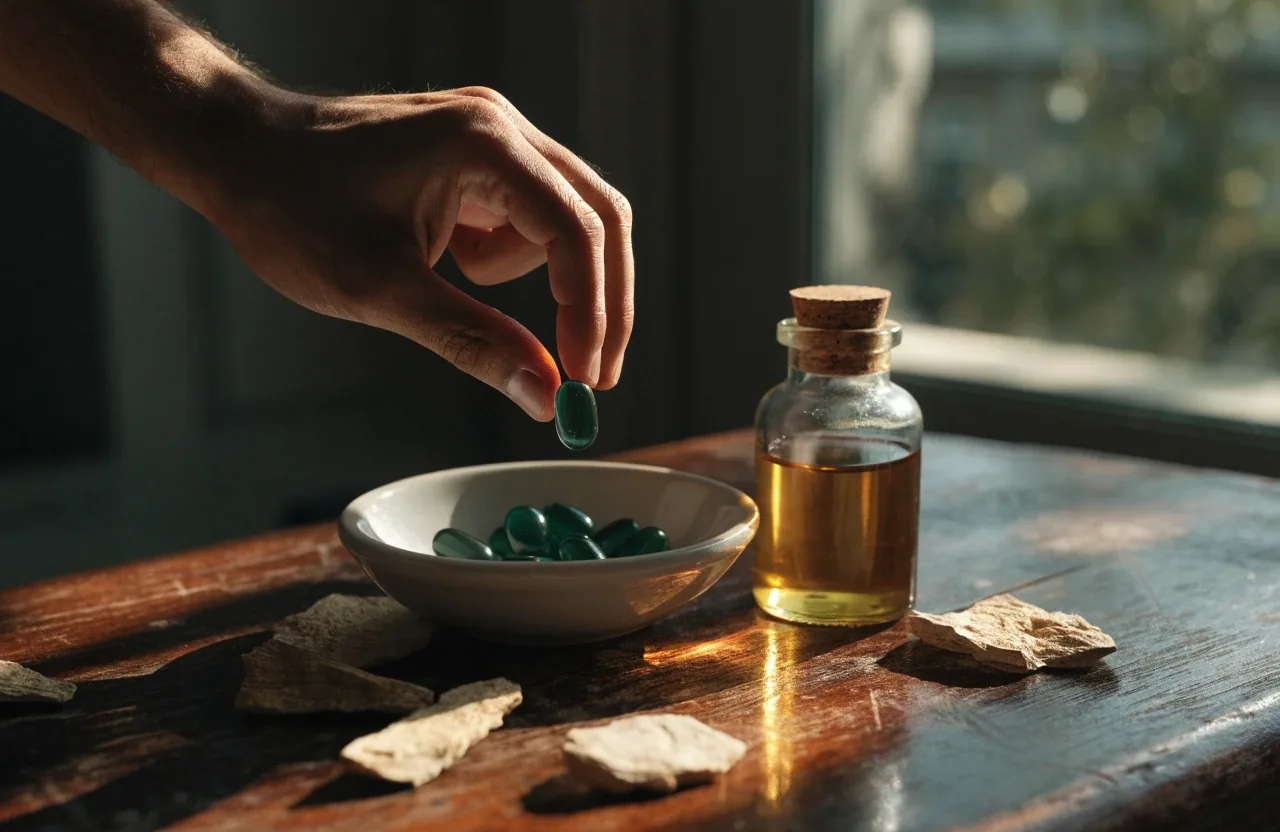
Energy and Endurance Formulas Explained
Energy and endurance formulas are the botanical half of the men's supplement shelf. They are built from plant extracts, sometimes with supporting vitamins, and their labels read very differently from a multivitamin panel.
The pattern is consistent enough that you can usually guess the blend structure from the first two names on the panel.
What goes into a botanical blend
A typical blend combines two or four recognizable botanicals with a small nutrient base. Panax ginseng is the most common name in the category and appears in men's formulas across several brands, usually alongside other extracts rather than alone. Maca is the second recurring name and tends to appear in products that also emphasize daily energy language.
Saw palmetto-type ingredients show up in capsule blends that pair them with ginseng and ginkgo biloba.
The recurring botanical names
- Panax ginseng
- The widest-recognized name in the category, listed across multiple brands and rarely sold alone in men's wellness ranges.
- Maca
- Appears in herbal lines and in daily-energy descriptions; a useful marker for products straddling botanicals and vitamin panels.
- Saw palmetto-type
- Shows up in capsule blends alongside ginseng and ginkgo biloba, in formulas oriented toward daily routine support.
- Ginkgo biloba
- A frequent companion extract in blends that combine several botanicals in one capsule serving.

Why ginseng keeps appearing
Ginseng has the widest recognition of any botanical in this category, and its position on labels reflects that. It appears in mixed formulas from multiple manufacturers and is rarely sold as an isolated product in men's wellness ranges. Its role in the blend is part of the formula's identity: a product featuring ginseng tends to present itself as a traditional botanical blend rather than a modern nutrient panel.
When you see it listed first, expect the rest of the panel to be botanical rather than vitamin-led.

Maca in the daily-use segment
Maca appears in both herbal lines and in men's multivitamin descriptions, which makes it a useful marker for products that straddle the two categories. A formula with maca and a full vitamin panel is trying to cover both botanical and nutritional ground. One with maca and little else is a botanical product with a narrow scope.
Neither approach is unusual in the Indonesian market. Reading which side of that line a product sits on tells you how to schedule it, since nutrient-dense products are usually taken with food.
Capsules as the default format
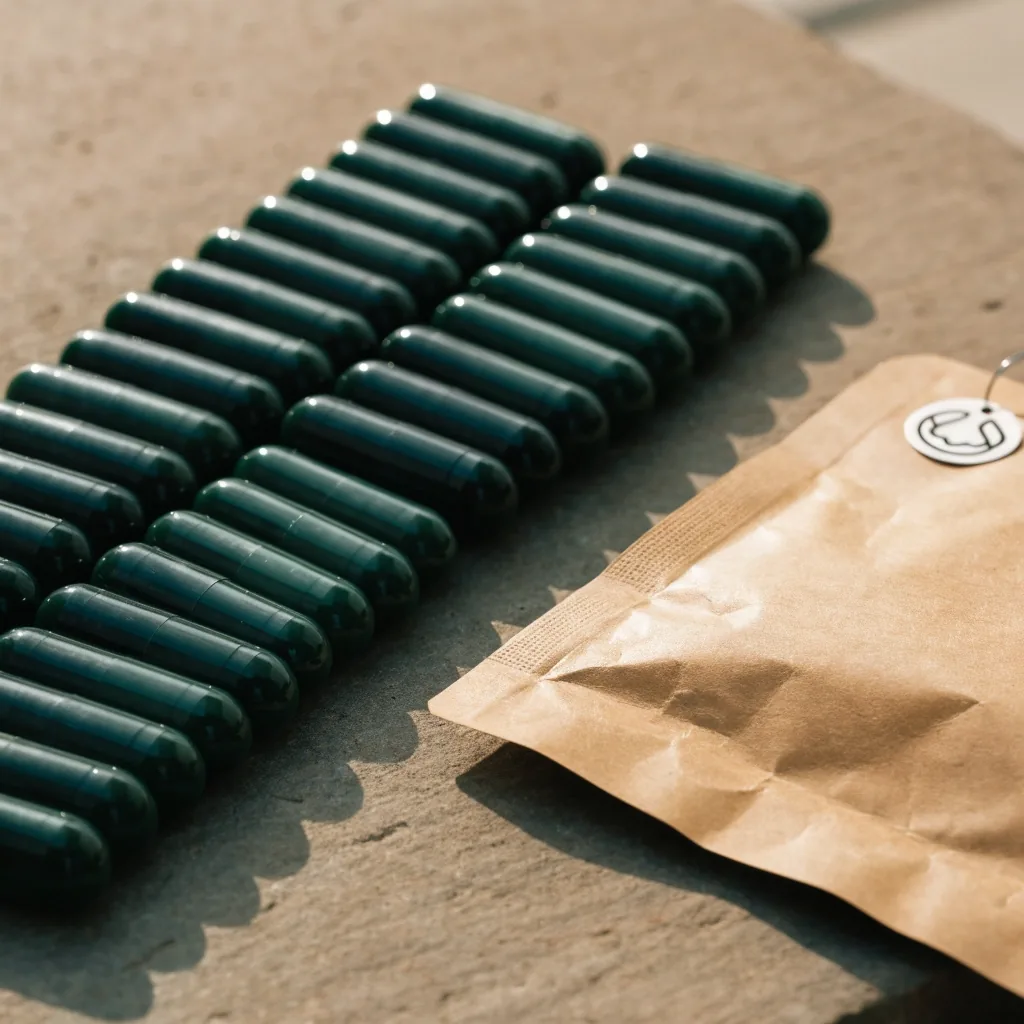
Capsules are the dominant format for botanical blends in this market, and the reason is mechanical: a capsule can hold a mixed powder without the compression a tablet requires. That makes it easier to combine several extracts in a single serving.
Capsule
Handles mixed powders without compression. The natural fit for formulas combining several botanical extracts in one serving.
Softgel
Appears for oil-based ingredients. A 60-softgel bottle is a common count in this category.
Caplet
Less frequent here, because botanical blends are usually dosed by weight rather than density, which is a capsule's strength.
Reading a botanical panel line by line
The panel is where a botanical blend becomes concrete. Work down it in this order and you usually know what you're comparing before you reach the price.
-
1
Find the amount per extract
Each extract should appear with an amount, and the panel should state whether that amount is per capsule or per serving.
-
2
Check for proprietary blends
Some products list an extract as part of a proprietary blend, which shows a total weight without individual amounts. That is legal and common, but it gives you less information.
-
3
Decide if the detail is enough for you
If individual amounts matter to your comparison, look for a panel that lists them separately.
-
4
Treat marketing-only ingredients as absent
If a product mentions an ingredient only in the marketing text and not in the panel, treat it as absent from the specification.
What the label does not tell you
A botanical panel tells you what is in the capsule. It does not tell you how the formula will affect you, and no label can. Supplement descriptions in this category often use energy, stamina, and vitality language, which is marketing vocabulary rather than a specification.
We describe the ingredient structure and leave the outcome language out, because nothing on a product label supports a claim about what a person will experience. Keeping that line clear is what makes a label comparison useful in the first place.
Registration and certification marks
Botanical products sold in Indonesia generally carry a BPOM registration and, where applicable, a halal mark. Both are worth checking on the listing or the package.
BPOM registration means the product has been registered with the national authority; halal certification covers the product's compliance with halal requirements, which matters to a large share of buyers here.
Neither mark speaks to how well a formula suits your routine. They confirm that the product cleared a process, and that is the scope of what they mean.
Matching the formula to your day
Botanical capsules are usually taken with a meal, which makes mealtimes the natural anchor. If your breakfast is consistent, that is the obvious slot. If your schedule shifts daily, a capsule you carry with you is more forgiving than a softgel that needs to stay cool.
The formula itself does not decide whether the habit sticks. The slot you attach it to does, and choosing that slot before buying is a more useful exercise than comparing two blends that differ mainly in branding.
Common questions about botanical formulas
Are botanical blends different from multivitamins?
A botanical blend is built around plant extracts such as ginseng or maca, while a multivitamin is built around a vitamin and mineral panel. Some products combine both, and their labels show which side they lean toward.
Why do so many formulas list ginseng first?
Ginseng has the widest recognition in the category, so it tends to lead the panel. Its position tells you the product is presented as a botanical blend rather than a nutrient product.
What is a proprietary blend?
It is a panel format that shows a total weight for several extracts without listing each amount separately. It is common and legal, but it gives you less detail than a panel with individual amounts.
Does a capsule work better than a softgel?
They suit different ingredients. Capsules handle mixed powders well, which is why botanical blends use them. Softgels suit oil-based ingredients. The right format depends on what is inside.

Compare panels before you compare prices
Once you know how a botanical panel is assembled, the shelf stops looking like a wall of similar bottles. Use the pages below to check formats, ingredient structures, and daily routine fit side by side.